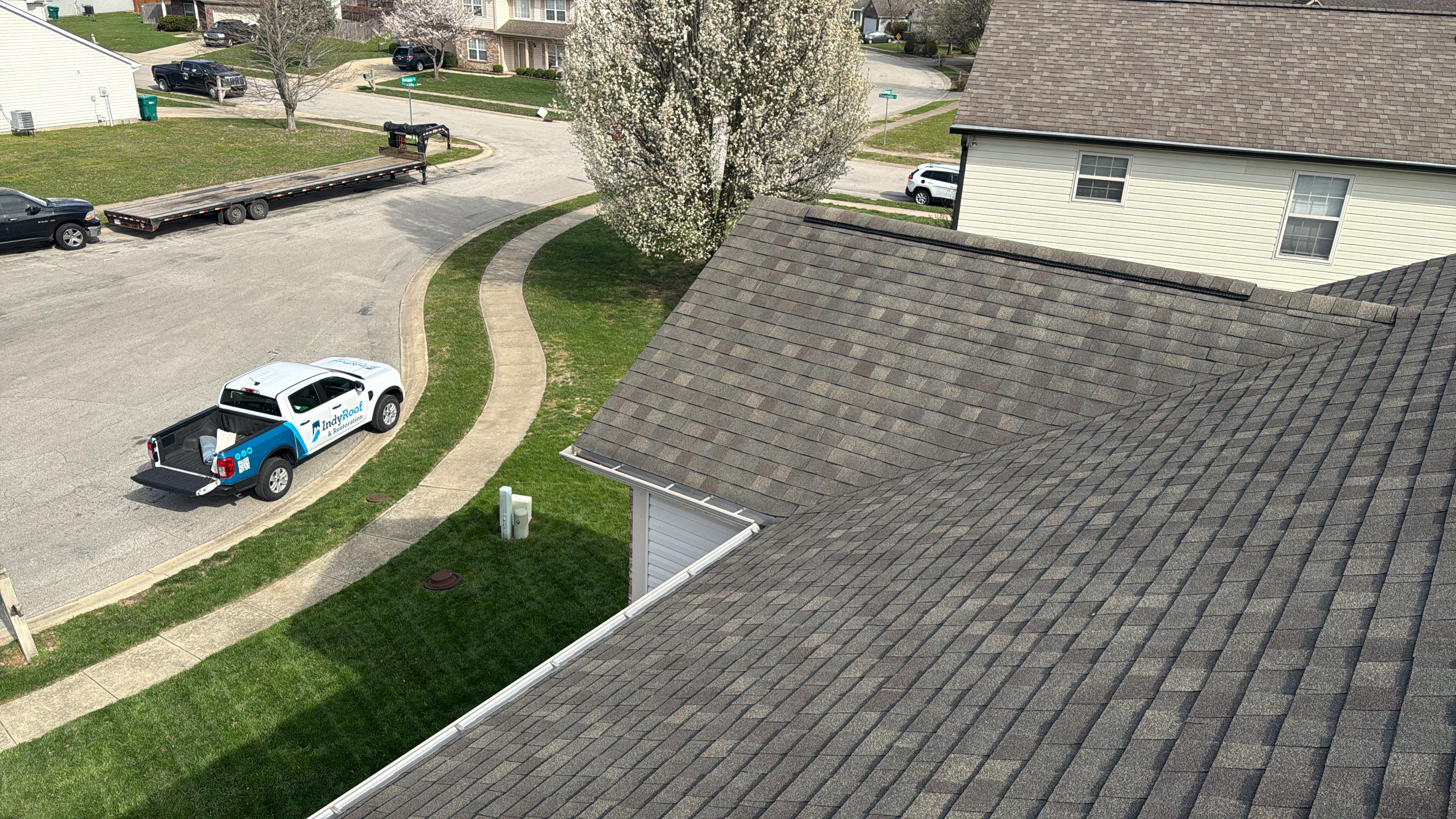
What are the signs I need a new roof?
The main signs include widely curling or cracked shingles, bald spots and granules in the gutters, a sagging roofline, water stains on ceilings, daylight in the attic, moss or rot, and damaged flashing. The roof's age matters too, since these signs on a roof near the end of its lifespan carry more weight. A single minor sign often means a repair, while several together usually point to replacement. For a Prince's Lakes homeowner, the clearest read comes from combining the visible signs with the roof's age and a professional inspection.
How do I know if my roof is too old to repair?
Compare its age to the expected lifespan of its material. Most asphalt roofs last roughly twenty to thirty years, so a roof in or past that range is naturally near the end, and repairs on such a roof tend to be short lived. If an old roof also shows multiple wear signs, repairing it usually means throwing good money after bad. A younger roof with an isolated problem is more likely worth repairing. For a Prince's Lakes homeowner, the combination of advanced age and several signs is what indicates a roof is past the point where repairs make sense.
What is the first step if I think I need a new roof?
Schedule a professional inspection. A roofer assesses the shingles, flashing, decking, and overall condition, confirms whether you are seeing wear that warrants repair or replacement, and provides an honest recommendation and estimate. That assessment turns your observations into a clear plan. For a Prince's Lakes homeowner, starting with an inspection, rather than guessing or waiting for a leak, is what lets you make a confident decision and, if replacement is needed, plan the work on your own timeline instead of reacting to an emergency.
Does moss on the roof mean it needs replacing?
Not by itself, but it can contribute to the need. Moss holds moisture against the shingles, which can work underneath and lead to rot over time, so it is more than a cosmetic issue. Light moss can sometimes be treated and removed, but heavy growth on an aging roof, especially where the surface feels soft, signals deterioration beneath. For a Prince's Lakes homeowner in a humid climate, persistent moss combined with other wear is a reason to have the roof evaluated for replacement rather than assuming a cleaning will resolve it. An inspection checks for rot under the moss.
Is curling a sign the roof is done?
Widespread curling usually is. As asphalt shingles age and dry out, they curl, cup, or claw, and once they lose their flat shape they no longer seal against wind and water. A few curled shingles in one area might be repairable, but curling across the whole roof means the shingles have reached the end of their life together. For a Prince's Lakes homeowner, broad curling is one of the strongest visual signs that replacement is due, since it indicates the entire field of shingles, not just one spot, has aged out.
Can I tell from inside my house if my roof is failing?
Yes, and interior signs are some of the most definitive. Water stains on ceilings or upper walls, active drips during rain, peeling paint from moisture, and a musty smell all indicate water intrusion. In the attic, daylight through the roof boards, stained or damp decking, and wet insulation confirm it from above. By the time water reaches the interior, it has already defeated the roof, so these signs are serious. For a Prince's Lakes homeowner, interior evidence in multiple places usually indicates a roof failing broadly and pointing toward replacement.
Does granule loss mean I need a new roof?
It can be a sign, depending on how much and how old the roof is. Some granule loss is normal, especially on a newer roof shedding loose granules. But heavy shedding that fills the gutters and leaves bald spots on an older roof means the shingles are wearing out, since the exposed asphalt ages quickly. For a Prince's Lakes homeowner, granule loss is one of the more reliable indicators, and when it appears on an aging roof alongside other wear, it often signals that replacement is approaching. An inspection gauges how far the wear has gone.
What does a sagging roof mean?
A sagging or wavy roofline is one of the more serious signs, because it points to a structural problem underneath rather than just worn shingles. It usually means water damaged decking or, in worse cases, weakened framing, indicating moisture has gotten past the surface into the wood. This warrants a prompt inspection and is not something to monitor casually. For a Prince's Lakes homeowner, a sagging roofline typically means a replacement that includes repairing the damaged decking is needed, and addressing it sooner limits how far the damage spreads into the structure.
Are missing shingles a sign I need a new roof?
Not always. A few missing shingles, often after a storm, can usually be replaced if the rest of the roof is sound. But if shingles are going missing across the whole roof, or the roof was already aging and brittle, the loss reflects a failing roofing field rather than isolated damage. The fix is an inspection to judge the extent and the roof's overall condition. For a Prince's Lakes homeowner, scattered, widespread missing shingles point toward replacement, while a small, contained loss on a healthy roof is typically a repair.
How urgent is it to replace a failing roof?
More urgent than many homeowners assume, because a failing roof lets water into the structure, and delay turns a manageable replacement into one that also involves decking, insulation, and interior damage. Signs like a sagging roofline or active interior leaks are especially time sensitive. Even when the roof is not actively leaking, acting on the signs lets you replace on your own schedule rather than in an emergency. For a Prince's Lakes homeowner, addressing a failing roof promptly is almost always cheaper and less stressful than waiting until water forces the issue.
Should I replace my roof after a storm?
It depends on the damage. A storm that strips a few shingles or causes isolated damage on a sound roof usually calls for a repair. But significant hail or wind damage across the roof, or storm damage on a roof that was already aging, can mean replacement, and insurance may help cover storm damage. The fix is a post storm inspection that documents the damage. For a Prince's Lakes homeowner, whether to repair or replace after a storm comes down to how extensive the damage is and the roof's prior condition, which an inspection determines.
How many repairs are too many before I should replace?
There is no fixed number, but the pattern matters. A roof that needs repair after repair, or develops leaks in several different spots, is signaling that the roofing has worn out generally. When the repairs become frequent and the problems are spreading rather than isolated, the cumulative cost starts to exceed the value of replacing. For a Prince's Lakes homeowner, the practical rule is that when you are repairing the roof regularly and each fix is followed by another, the roof has likely reached the point where replacement is the smarter spend.